World's most popular travel blog for travel bloggers.

Interest on Capital

Interest on capital is an amount at an agreed rate of interest which is credited to a partner based on the amount of capital contributed Interest on capital of partners is calculated for relevant period for which the amount of capital has been used in business. Capital introduced or withdrawn by a partner during the year has to be taken for the purpose of calculation of interest. The following are the points in relation to interest on a partner’s capital:
In case the profit is less than the interest on capital, the profit will be distributed in ratio of capital contributed by each partner..
Interest on capital is a charge on the profits of a firm and it decreases the net available profit for appropriation. Therefore, it is debited to the P&L account to recognise as an expense (and a charge on the profits).
Interest is payable to the partners and hence, the partner’s capital is credited with the amount of  interest.
In case of  loss, no interest is allowed on capital.
If the partner agreement is silent regarding payment of  interest on capital then no interest will be allowed to partners


Provision for bad and doubtful debts :  
He provision for doubtful debts is the estimated amount of bad debt  that will arise from accounts receivable  that have been issued but not yet collected. It is identical to the allowance for doubtful accounts.  The provision is used under accrual basis accountings so that an expense is recognized for probable bad debts as soon as invoices are issued to customers, rather than waiting several months to find out exactly which invoices turned out to be uncollectible. Thus, the net impact of the provision for doubtful debts is to accelerate the recognition of bad debts into earlier reporting periods.
A business typically estimates the amount of bad debt based on historical experience, and charges this amount to expense with a debit to the bad debt expense account (which appears in the income statement) and a credit to the provision for doubtful debts account (which appears in the balance sheet). The organization should make this entry in the same period when it bills a customer, so that revenues are matched with all applicable expenses (as per the matching principle)
The provision for doubtful debts is an accounts receivable contra account, so it should always have a credit balance, and is listed in the balance sheet directly below the accounts receivable line item. The two line items can be combined for reporting purposes to arrive at a net receivables figure.
Later, when you identify a specific customer invoice that is not going to be paid, eliminate it against the provision for doubtful debts. This can be done with a journal entry that debits the provision for doubtful debts and credits the accounts receivable account; this merely nets out two accounts within the balance sheet, and has no impact on the income statement.


ANSWER: Working capital is that part of company’s capital which is used for purchasing raw material and involve in sundry debtors. We all know that current assets are very important for proper working of fixed assets. Suppose, if you have invested your money to purchase machines of company and if you have not any more money to buy raw material, then your machinery will no use for any production without raw material. From this example, you can understand that working capital is very useful for operating any business organization. We can also take one more liquid item of current assets that is cash. If you have not cash in hand, then you can not pay for different expenses of company, and at that time, your many business works may delay for not paying certain expenses. If we define working capital in very simple form, then we can say that working capital is the excess of current assets over current liabilities.

Types of Working Capital:                             
1. Gross working capital:
            Total or gross working capital is that working capital which is used for all the current assets. Total value of current assets will equal to gross working capital.

2. Net Working Capital:
            Net working capital is the excess of current assets over current liabilities.

Net Working Capital = Total Current Assets – Total Current Liabilities

This amount shows that if we deduct total current liabilities from total current assets, then balance amount can be used for repayment of long term 
debts at any time.

3. Permanent Working Capital:
            Permanent working capital is that amount of capital which must be in cash or current assets for continuing the activities of business.

4. Temporary Working Capital 
            Sometime, it may possible that we have to pay fixed liabilities, at that time we need working capital which is more than permanent working capital, then this excess amount will be temporary working capital. In normal working of business, we don’t need such capital.

FACTORS THAT TAKEN INTO CONSIDERATION BEFORE ESTIMATING WORKING CAPITAL
What is the need for working capital?                    
            After study the nature of production, we can estimate the need for working capital. If company produces products at large scale and continues producing goods, then company needs high amount of working capital.

What is optimum level of Working capital in business?       
            Have you achieved the optimum level of working capital which has invested in current assets? Because high amount of working capital will decrease the return on investment and low amount of working capital will increase the risk of business. So, it is very important decision to get optimum level of working capital where both profitability and risk will be balanced. For achieving optimum level of working capital, finance manager should also study the factors which affects the requirement of working capital and different elements of current assets. If he will manage cash, debtor and inventory, then working capital will automatically optimize.
What are main Working capital policies of businesses?             
            Policies are the guidelines which are helpful to direct business. Finance manager can also make working capital policies.
The Repercussions if a firm has inadequate working capital
1. The firm is unable to take advantages of new opportunities or adapt to change.    
2. Trade discounts are lost. A firm with sufficient working capital is able to finance larger stocks and can therefore place large orders.    
3. Cash discounts are lost. Some firms will try to persuade their debtors to pay early by offering cash discounts.     
4. The advantages of being able to offer a credit line to customers are forgone.    
5. Financial reputation is lost due to non-payment of trade creditors on time.   
6. Creditors may apply to the court for winding up if the firm fails to pay their obligations on time.


ANSWER(b) When you are analyzing a single conventional project, both NPV and IRR will provide you the same indicator about whether to accept the project or not. However, when comparing two projects, the NPV and IRR may provide conflicting results. It may be so that one project has higher NPV while the other has a higher IRR. This difference could occur because of the different cash flow patterns in the two projects.

The following example illustrates this point.
Project A
Project B
Year 0
-5000
-5000
Year 1
2000
0
Year 2
2000
0
Year 3
2000
0
Year 4
2000
0
Year 5
2000
15000
NPV
$2,581.57
$4,313.82
IRR
29%
25%

The above example assumes a discount rate of 10%. As you can see, Project A has higher IRR, while Project B has higher NPV.
If these two projects were independent, it wouldn’t matter much because the firm can accept both the projects. However, in case of mutually exclusive projects, the firm needs to decide one of the two projects to invest in.
When facing such a situation, the project with a higher NPV should be chosen because there is an inherent reinvestment assumption. In our calculation, there is an assumption that the cash flows will be reinvested at the same discount rate at which they are discounted. In the NPV calculation, the implicit assumption for reinvestment rate is 10%. In IRR, the implicit reinvestment rate assumption is of 29% or 25%. The reinvestment rate of 29% or 25% in IRR is quite unrealistic compared to NPV. This makes the NPV results superior to the IRR results. In this example, project B should be chosen.

The above example illustrated the conflicting results of NPV and IRR due to differing cash flow patterns. The conflicting results can also occur because of the size and investment of the projects. A small project may have low NPV but higher IRR.

Project A
Project B
Year 0
-5000
-20000
Year 1
2000
7000
Year 2
2000
7000
Year 3
2000
7000
Year 4
2000
7000
Year 5
2000
7000
NPV
$2,581.57
$6,535.51
IRR
29%
22%

In this case, Project A has lower NPV compared to Project B but has higher IRR. Again, if these were mutually exclusive projects, we should choose the one with higher NPV, that is, project B.


ANS (a) Solvency, or leverage, ratios, judge the ability of a company to raise capital and pay its obligations. Solvency ratios, which include debt to worth and working capital, determine whether an entity is able to pay all of its debts. In practice, bankers often include leverage ratios as debt covenants in contract agreements. Bankers want to ensure the entity can maintain operations during difficult financial periods.There are different types of solvency ratios that you can use to track different elements of your finances. Here are some of the most common types of solvency ratios that companies track on a regular basis:
Debt-to-Equity Ratio
This ratio is a measure of total debt as compared to shareholder equity. As an equation, you take your business’ total liabilities and divide them by your shareholders’ equity .Whereas a general high solvency ratio tends to indicate that a company is fiscally sound, a high debt-to-equity ratio suggests that the company over-utilized debt to bankroll its growth. As interest levels continue to climb, companies may suffer from volatile earnings. To prevent insolvency, business owners must focus on deferring costs, reducing debt and boosting overall profits. Another popular iteration of the ratio is the Debt to Equity ratio which uses only long-term debt in the numerator instead of total debt or total liabilities. Total debt includes both long-term debt and short-term debt which is made up of actual short-term debt that has actual short-term maturities and also the portion of long-term debt that has become short-term in the current period because it is now nearing maturity. This second classification of short-term debt is carved out of long-term debt and is reclassified as a current liability called current portion of long-term debt (or a similar name). The remaining long-term debt is used in the numerator of the long-term-debt-to-equity ratio.
FORMULA

Debt/Equity Ratio = Total Liabilities / Shareholders' Equity
           Total Liabilities = Long Term Liability + Current liabilities
   Shareholders Equity= Equity share capital + Preference share capital +                       Reserve&Surplus

Total-Debt-to-Total-Assets Ratio
This refers to the ratio of long-term and short-term liabilities compared to total holdings. As an equation, it is expressed as your business’ short- and long-term liabilities divided by its total assets. As a company’s total-debt-to-total-assets ratio increases, it poses a greater financial risk to banks and creditors.
When calculating total-debt-to-total-assets, it’s important to take into account the degree of leverage. While some liabilities, such as supplier costs and employee bonuses, may be negotiable, companies with high total-debt-to-total-assets have higher leverages and, as a result, lower flexibility. Because of this, businesses should strive to raise the value of current assets or reduce their debt levels moving forward.

Total-Debt-to-Total Assets Ratio =       
                                                                TOTAL ASSETS = NON CURRENT ASSETS + CURRENT ASSETS
                                                                TOTAL DEBT = NON CURRENT LIABILITY + CURRENT LIABILITY

Interest-Coverage Ratios
 The interest coverage ratio (ICR) is a measure of a company's ability to meet its interest payments. Interest coverage ratio is equal to earnings before interest and taxes (EBIT) for a time period, often one year, divided by interest expenses for the same time period. The interest coverage ratio is a measure of the number of times a company could make the interest payments on its debt with its EBIT. It determines how easily a company can pay interest expenses on outstanding debt. 
Interest coverage ratio is also known as interest coverage, debt service ratio or debt service coverage ratio
    Typically, a company with an interest-coverage ratio of 1.5 or less is viewed as financially unstable and may struggle to Secure loan from banks and other lenders. To boost your interest-coverage ratio, strive to reduce debt and boost overall profits.

            FORMULA

 INTEREST COVERAGE RATIO =  
                             EBIT = EARNING BEFORE PAYMENT OF INTEREST ND TAX
INTEREST EXPENSE= INTEREST PAYMENT ON DEBENTURES + INTEREST PAYMENT IN LOANS TAKEN 


Ans. A big part of management is decision making. It is involved in almost anything managers do. A classical list of managerial tasks includes planning,
organizing, staffing, delegating or directing, coordinating or controlling, reporting, and budgeting (note the acronym POSDCORB). Some of these tasks are a direct
application of decision making, such as planning and delegating or directing.
Following are the important steps of the decision-making process. Each step may be supported by different tools and techniques.


Step 1: Identification of the Purpose of the Decision
In this step, the problem is thoroughly analyzed. There are a couple of questions one should ask when it comes to identifying the purpose of the decision.

  •  What exactly is the problem?
  •  Why the problem should be solved?
  •  Who are the affected parties of the problem?
  •  Does the problem have a deadline or a specific time-line?

Step 2: Information Gathering
A problem of an organization will have many stakeholders. In addition, there can be dozens of factors involved and affected by the problem.
In the process of solving the problem, you will have to gather as much as information related to the factors and stakeholders involved in the problem. For the
process of information gathering, tools such as 'Check Sheets' can be effectively used.

Step 3: Principles for Judging the Alternatives
In this step, the baseline criteria for judging the alternatives should be set up. When it comes to defining the criteria, organizational goals as well as the corporate
culture should be taken into consideration.
As an example, profit is one of the main concerns in every decision making process. Companies usually do not make decisions that reduce profits, unless it is an
exceptional case. Likewise, baseline principles should be identified related to the problem in hand.

Step 4: Brainstorm and Analyze the Choices
For this step, brainstorming to list down all the ideas is the best option. Before the idea generation step, it is vital to understand the causes of the problem and
prioritization of causes.
For this, you can make use of Cause-and-Effect diagrams and Pareto Chart tool. Cause-and-Effect diagram helps you to identify all possible causes of the
problem and Pareto chart helps you to prioritize and identify the causes with the highest effect.
Then, you can move on generating all possible solutions (alternatives) for the problem in hand.

Step 5: Evaluation of Alternatives
Use your judgment principles and decision-making criteria to evaluate each alternative. In this step, experience and effectiveness of the judgment principles come
into play. You need to compare each alternative for their positives and negatives.

Step 6: Select the Best Alternative
Once you go through from Step 1 to Step 5, this step is easy. In addition, the selection of the best alternative is an informed decision since you have already
followed a methodology to derive and select the best alternative.

Step 7: Execute the decision:
Convert your decision into a plan or a sequence of activities. Execute your plan by yourself or with the help of subordinates.

Step 8: Evaluate the Results:
Evaluate the outcome of your decision. See whether there is anything you should learn and then correct in future decision making. This is one of the best
practices that will improve your decision-making skills.
The decision quality improves with higher information quality for a decision-maker that has knowledge about the relationships among problem variables.
However, the decision quality of a decision-maker that doesn't know these relationships may degrade with higher information quality. Where Simultaneous
improvement in information quality will reflect on decision-maker quality and results in higher decision quality .

Concludes that if adequate attention and focus on the aspects of information quality then a major step towards the development of effective DSS would be
achieved. No DSS can provide excellent performance if it is based on poor quality of information. However, it is not easy to identify what qualities are essential for
making information useful for decision-making. There are certain characteristics of information quality that should be provided in DSS. It is proposed by some
scholars the list of dimensions or elements used in assessing Information Quality are the following :
• Intrinsic: Accuracy, Objectivity, Believability, Reputation
• Contextual: Relevancy, Value-Added, Timeliness, Completeness, Amount of information
• Representational: Interpretability, Format, Coherence, Compatibility
• Accessibility: Accessibility, Access security

For Full Assignment:-  CLICK HERE
Ans.
Advantages of Data Mining
Marketing / Retail
Data mining helps marketing companies build models based on historical data to predict who will respond to the new marketing campaigns such as direct mail,
online marketing campaign…etc. Through the results, marketers will have an appropriate approach to selling profitable products to targeted customers.
Data mining brings a lot of benefits to retail companies in the same way as marketing. Through market basket analysis, a store can have an appropriate production
arrangement in a way that customers can buy frequent buying products together with pleasant. In addition, it also helps the retail companies offer certain discounts
for particular products that will attract more customers.
Finance / Banking
Data mining gives financial institutions information about loan information and credit reporting. By building a model from historical customer’s data, the bank,
and financial institution can determine good and bad loans. In addition, data mining helps banks detect fraudulent credit card transactions to protect credit card’s
owner.
Manufacturing
By applying data mining in operational engineering data, manufacturers can detect faulty equipment and determine optimal control parameters. For example,
semiconductor manufacturers have a challenge that even the conditions of manufacturing environments at different wafer production plants are similar, the quality
of wafer are a lot the same and some for unknown reasons even has defects. Data mining has been applying to determine the ranges of control parameters that lead
to the production of the golden wafer. Then those optimal control parameters are used to manufacture wafers with desired quality.
Governments
Data mining helps government agency by digging and analyzing records of the financial transaction to build patterns that can detect money laundering or criminal
activities.
Limitation of data mining
Privacy Issues
The concerns about the personal privacy have been increasing enormously recently especially when the internet is booming with social networks, e-commerce,
forums, blogs…. Because of privacy issues, people are afraid of their personal information is collected and used in an unethical way that potentially causing them a
lot of troubles. Businesses collect information about their customers in many ways for understanding their purchasing behaviors trends. However businesses don’t
last forever, some days they may be acquired by other or gone. At this time, the personal information they own probably is sold to other or leak.
Security issues
Security is a big issue. Businesses own information about their employees and customers including social security number, birthday, payroll and etc. However how
properly this information is taken care is still in questions. There have been a lot of cases that hackers accessed and stole big data of customers from the big
corporation such as Ford Motor Credit Company, Sony… with so much personal and financial information available, the credit card stolen and identity theft
become a big problem.
Misuse of information/inaccurate information
Information is collected through data mining intended for the ethical purposes can be misused. This information may be exploited by unethical people or
businesses to take benefits of vulnerable people or discriminate against a group of people.
In addition, data mining technique is not perfectly accurate. Therefore, if inaccurate information is used for decision-making, it will cause serious consequence.
Business Intelligence
The term business intelligence (BI) typically refers to a set of business processes for collecting and analyzing business information. This includes the technology
used in these processes, and the information obtained from these processes.
The information economy puts a premium on high quality actionable information — exactly what Business Intelligence (BI) tools like data warehousing, data
mining, and OLAP can provide to the business. A close look at the different organisational functions suggests that BI can play a crucial role in almost every
function. It can give new and often surprising insights about customer behavior; thereby helping the businesses meeting their ever-changing needs and desires. On
the supply side, BI can help businesses to identify their best vendors and determine what separates them from not so good vendors. It can give businesses better
understanding of inventory and its movement and also help improve production and storefront operations through better category management. Through a host of
analyses and reports, BI can also improve internal organisational support functions like finance and human resource management of any business.
Business Intelligence is applicable to all types of businesses; however, the magnitude of gains may vary. Here we will discuss in detail how BI can improve the key
functional areas and thereby the overall productivity of the business.
Big Data Technology
Big Data and data mining are completely different concepts. However, both concepts involve the use of large data sets to handle the collection or reporting of data
that helps businesses or clients make better decisions. However, the two concepts are used in two different elements of this operation.
The term Big Data can be defined simply as large data sets that outgrow simple databases and data handling architectures. For example, data that cannot be easily
handled in Excel spreadsheets may be referred to as Big Data.


Data mining relates to the process of going through large sets of data to identify relevant or pertinent information. Businesses often collect large data sets that may
be automatically collected. However, decision makers need access to smaller, more specific pieces of data and use data mining to identify specific data that may
help their businesses make better leadership and management decisions.

For Full Assignment:- CLICK HERE
Ans:
1. Introduction
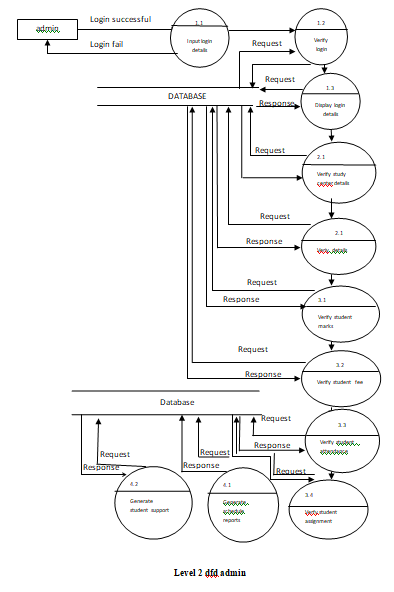
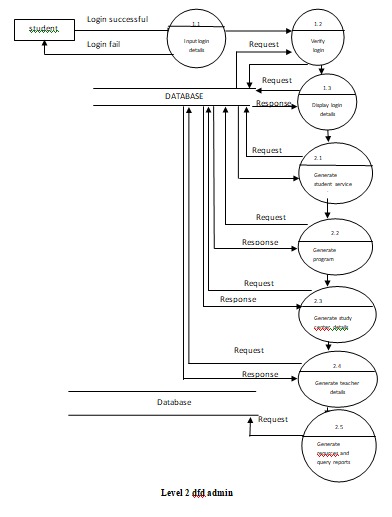
The SRS is being prepared for study center management system(SCMS) the purpose system is used to maintenance
of study center via online Applications.
1.1. Purpose
The SRS documentation defines the structure and behaviour of the system SCMS. It defines functions of system
clearly and easily to understandable. So that, customer attract towards it.
1.2. Scope
It can be used by university for managing study center . It will help them in managing all the work of a study center
online. Its very easy and user friendly.
1.3. Definition, Acronyms and Abbreviation
DEFINITION:
• USER: A person who can register and use study center application.
• ADMIN: A person who manage all functionality of software.
ACRONYMS:
• SCMS: study center management system
• SDLC: Software development life cycle.

2. General description
2.1 Product Perspective
The SCMS consists of application server and web server.
2.2 Product functions
The product software mainly support SCMS
• User registration login
• Admission
• change study center
• Search course details
2.3 User characteristics
There are two kind of user of SCMS
• User: A person who can register and take classes.
• Admin: A person who manages all functionality of software.
2.4 Constraints
• SCMS can run in internet explorer, Google chrome, Opera.
• GUI is only in plain English.
• Login and password is used for identification of authorized persons.

2.5 Assumption and Dependencies

The main assumption of SCMS software to decrease the user work load so that to increase the performance. The
dependence of software is prices system that dependent on GOVT. polices.
3 Specific Requirements:-
It describes function and non-function requirement of system
3.1 External interface requirements:-
It describes input output software and communication.
3.1.1 User inter face
 Login page
 Registration page
 Search page
 Study center
3.1.2 Hardware inter face
There is no any need of special hardware to operate this software.
Client Side
Processor : Pentium-IV
RAM : 512MB
Hard Disk : 80GB
Server Side
Processor : Pentium-IV
RAM : 2GB
Hard Disk : 320GB
3.1.3 Software interface
Database product
• JDBC/ODBC
3.2 Functional requirements
Registration process: it requires users’ details including ID, password and email id.
Study center allocation process: After registration process, user can login and get information about course
availability.
Search: it is used to search course and many more.
3.3 Performance requirements
• Search information within a 2 sec.
• can study online using videos and study material.
3.4 Design constraints
• Webpage are design using HTML 5.0 and java script
3.5 Logical database requirements
• It describes the logical database for SCMS application
3.6 Software system attributes
A. Reliability
B. Availability
C. Security
D. Maintainability